.png?w=128&h=128)
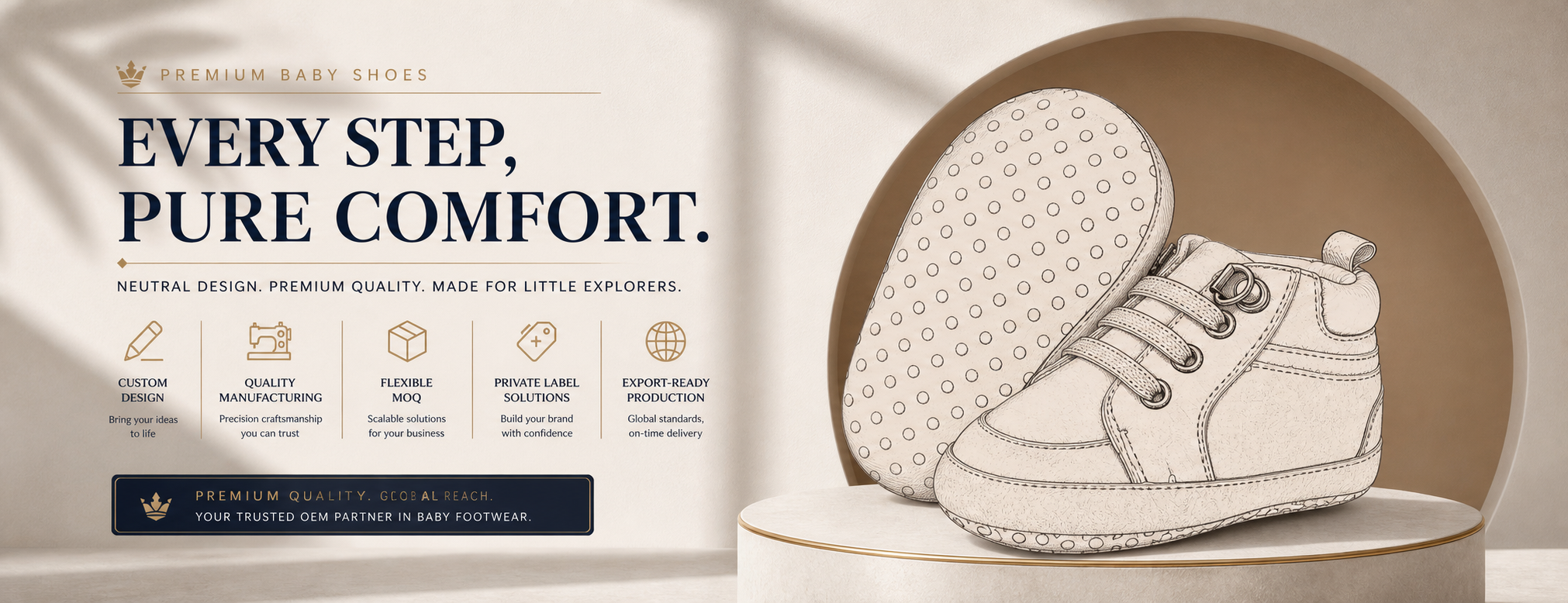
OEM Custom Baby Shoes: A Complete Guide for Importers and Retailers
The global baby footwear market is projected to surpass $70 billion by 2030, driven by rising birth rates in developing regions and increasing per-child spending among millennial and Gen Z parents. For importers, distributors, and retail chains, this growth presents a clear opportunity—but only for those who can differentiate their product lines in a crowded market. Generic, off-the-shelf baby shoes no longer command premium shelf space or customer loyalty. The brands winning today are those offering unique designs, proprietary sizing systems, and materials parents can trust.
This is where OEM custom baby shoes enter the picture. Partnering with a specialized baby shoes manufacturer for private-label or fully custom production gives you control over design, materials, quality standards, and branding—all while leveraging the manufacturing expertise and cost efficiencies of an established factory. In this guide, we cover everything importers and retailers need to know about sourcing custom baby footwear, from design specifications to quality control, so you can bring a differentiated product line to market with confidence.
Why Choose an OEM Baby Shoes Manufacturer?
Working with a generic supplier might work for basic commodity items, but baby footwear sits at the intersection of safety regulations, biomechanical requirements, and fashion trends—three dimensions that demand specialized expertise. Here is what a dedicated OEM baby shoes manufacturer brings to the table that a generalist factory cannot.
Regulatory Compliance and Safety Standards
Baby shoes sold in the EU must comply with REACH and EN 71-3 chemical safety standards. The U.S. market requires CPSIA compliance, including strict limits on lead, phthalates, and small parts. China's GB 30585-2014 mandates specific construction standards for children's footwear. A reputable baby shoes factory maintains in-house testing protocols and third-party lab relationships to ensure every batch meets the target market's regulatory requirements. When you work with an OEM partner that already knows these frameworks inside out, you avoid the costly learning curve and the legal exposure that comes with non-compliant imports.
Specialized Lasts and Sizing Knowledge
Baby feet are not scaled-down adult feet. Newborns have mostly cartilage and fat pads; toddlers have different arch development stages; pre-walkers need entirely different construction than confident walkers. A specialized baby shoes manufacturer maintains proprietary lasts for each developmental stage—newborn (0–3 months), pre-walker (3–12 months), first-walker (12–18 months), and toddler (18–36 months)—each engineered with the correct toe-box width, heel cup depth, and flex-point positioning. This is hard-won expertise accumulated over years of focused production.
Material Safety and Sourcing
Babies mouth their shoes. The materials touching those gums must be non-toxic, free from azo dyes, and resistant to the bacteria that thrive in moist, warm environments. Professional baby shoe factories maintain vetted supply chains for chrome-free leather, organic cotton linings, food-grade silicone, and water-based adhesives. Most general footwear factories do not have these relationships in place, and building them from scratch adds months to your timeline.
Low Minimum Order Quantities (MOQs) with OEM Flexibility
Contrary to common belief, custom baby shoes do not always require massive production runs. Many established manufacturers now offer tiered MOQ structures—as low as 300–500 pairs per design for basic customizations, scaling up for fully bespoke lasts and proprietary molds. This makes private-label baby footwear accessible to boutique retailers and regional distributors, not just national chains.
Related reading: If you are still evaluating sourcing partners, see our guide on How to Choose a Reliable Baby Shoes Supplier for a step-by-step vetting framework.
Types of Custom Baby Shoes You Can Source
When importers think of custom baby footwear, they often picture a single type of shoe. In reality, OEM customization spans a wide spectrum of categories, each with its own manufacturing considerations. Below is a breakdown of the most in-demand categories and what to specify when placing custom orders.
| Category | Best-Selling Styles | Key Customization Points | Typical MOQ |
|---|
| Newborn & Pre-Walker | Crib shoes, soft-sole booties, sensory booties | Sole flexibility grade, inner lining material, ankle elastic tension | 500–800 pairs |
| First-Walker | T-bar sandals, Mary Janes, soft-sole sneakers | Outsole grip pattern, toe-cap reinforcement, adjustable closures | 500–1,000 pairs |
| Toddler Casual | Canvas sneakers, slip-on loafers, espadrilles | Upper fabric weight, insole cushioning, heel counter stiffness | 600–1,200 pairs |
| Baby Sandals & Beach Shoes | Water-friendly sandals, jelly shoes, aqua socks | Drainage hole configuration, quick-dry lining, UV-resistant materials | 500–1,000 pairs |
| Winter & Leather Baby Shoes | Fur-lined boots, leather brogues, shearling moccasins | Leather grade and origin, insulation thickness, sole tread depth | 600–1,000 pairs |
| Baby Dress Shoes | Patent leather oxfords, bow-trim pumps, formal loafers | Upper finish, buckle/hardware plating, sock-liner artwork | 400–800 pairs |
| Organic Baby Shoes | Organic cotton booties, vegetable-tanned leather shoes | GOTS certification documentation, natural dye lot consistency | 500–800 pairs |
Key Customization Variables by Category
Newborn and pre-walker shoes require the softest possible soles—typically 0.5–1.5mm suede or non-slip silicone dots—combined with roomy toe boxes that allow unrestricted toe splay. Specify whether you want elasticated ankle bands (quicker to put on) or hook-and-loop closures (more adjustable for narrow or chubby feet).
Baby sandals and beach shoes demand waterproof upper materials and non-absorbent insoles. For jelly-style sandals, specify PVC-free formulations, as many European retailers now require phthalate-free alternatives. Discuss drainage speed and drying time with your manufacturer—these are competitive selling points in tropical markets.
Winter and leather baby shoes represent the highest-value segment for most importers. Full-grain cowhide and lambskin command premium retail prices, but only if sourced from consistent-grade lots. Ask your OEM baby shoes manufacturer for leather thickness specifications in writing (typically 1.0–1.4mm for uppers, 2.0–2.5mm for structured styles) and request dye-lot samples before full production begins.
Organic baby shoes require the most rigorous documentation. GOTS certification must cover the entire supply chain—from cotton farm to finished shoe. Your manufacturer should provide chain-of-custody certificates, lab reports for dye toxicity, and documentation of social compliance audits at every production stage.
Related reading: For an inside look at how custom designs move from concept to finished product, read The Baby Shoes Manufacturing Process: From Sketch to Shipment.
The Custom Baby Shoes Development Timeline
Managing expectations around production timelines is one of the most important things an importer can do. Below is a realistic timeline for a first-time custom baby shoes order with a new manufacturer, assuming standard complexity (no new last development, no proprietary hardware molds).
| Phase | Duration | What Happens |
|---|
| Design & Specification | 1–2 weeks | Submit tech packs, reference samples, material swatches. Factory reviews for feasibility. |
| Sample Development | 2–3 weeks | Factory produces 2–3 pairs per style in your requested material and color combinations. |
| Sample Review & Revision | 1–2 weeks | You receive and evaluate samples. Submit revision requests. Factor in 5–7 days for each round of revisions. |
| Material Procurement | 2–4 weeks | Factory orders production-grade leather, textiles, soles, hardware. Timeline varies by material rarity and supplier lead times. |
| Pre-Production Sample (PPS) | 1–2 weeks | Final sample made from production-grade materials, serving as the quality benchmark for the entire run. |
| Bulk Production | 4–6 weeks | Full production run, typically 500–3,000 pairs per style depending on factory capacity. |
| Quality Control & Audit | 1 week | AQL 2.5 inspection. Third-party lab testing if required by your market's regulations. |
| Logistics | 2–5 weeks | Sea freight (4–5 weeks to Europe/US East Coast) or air freight (5–10 days). Customs clearance adds 3–7 days. |
Total estimated timeline: 12–20 weeks from concept to your warehouse, assuming one round of sample revisions and sea freight. Rush production with air freight can compress this to 8–10 weeks for urgent seasonal launches.
Tips for Keeping Your Timeline on Track
- Submit complete tech packs on Day 1. Ambiguous specifications are the number-one cause of sample delays. A proper tech pack includes flat sketches, material codes, color Pantone numbers, construction callouts, and measurement grade rules.
- Book production capacity early. Many baby shoes factories run at near-capacity during Q2 (summer collection) and Q4 (winter collection) production cycles. Confirm your production slot before design work begins.
- Use a single point of communication. Having one designated contact at your OEM baby shoes manufacturer who tracks your entire order—from sample room to shipping dock—reduces miscommunication and keeps priorities aligned.
How to Evaluate a Custom Baby Shoes Factory
Not all factories advertising "OEM baby shoes" actually have the capacity, certifications, or expertise to deliver consistent quality. Below is a practical evaluation framework you can use during supplier visits or video audits.
1. Check Specialized Equipment
A legitimate baby shoes factory should have:
- Small-size lasting machines calibrated for infant and toddler lasts (sizes EU 16–27)
- Soft-sole stitching lines capable of handling thin, flexible materials without puckering
- In-house sole injection molding if producing PVC/TPR soles, or established partnerships with sole suppliers
- Dedicated sample room staffed separately from the main production line
2. Verify Certifications on Site
Do not accept scanned PDFs alone. During factory visits, check:
- BSCI or SMETA social compliance audit reports (valid within 12 months)
- ISO 9001 quality management certification
- CPSIA/REACH third-party test reports for the specific material lots used in recent orders
- GOTS or OEKO-TEX certifications if you are developing organic baby shoes
3. Audit the Inline QC Process
A strong manufacturer runs at least three quality gates during production:
- Incoming material inspection: Leather thickness, color consistency, hardware plating tests
- Inline inspection (30% stage): Stitching tension, sole bonding integrity, symmetry checks
- Pre-shipment inspection (AQL 2.5): Final appearance, size accuracy, packaging standards
Ask to see QC checkpoint records from recent orders. A factory that cannot produce these on demand likely does not maintain systematic quality control.
4. Request Reference Orders
Ask for contact information for 2–3 existing import clients. Legitimate OEM baby shoes manufacturers will happily provide references (often with their clients' permission). When speaking with references, ask about on-time delivery rates, defect ratios, and how the factory handled any quality disputes.
Related reading: Looking ahead to what styles will sell in the coming seasons? Our Baby Shoes Trends 2026: What Importers Need to Know covers the silhouettes, materials, and color directions shaping the market.
Pricing and Cost Structure
Understanding how a custom baby shoes quote is built helps you negotiate more effectively and avoid surprises in the final invoice. Below is the typical cost breakdown for a custom baby shoe with moderate complexity (e.g., a leather first-walker sneaker with rubber sole).
| Cost Component | Percentage of Total | What Influences It |
|---|
| Materials (leather, textile, sole, hardware) | 40–50% | Leather grade, sole type, hardware finish, quantity purchased |
| Labor (cutting, stitching, lasting, assembly) | 25–35% | Design complexity, number of pieces per shoe, stitching density |
| Overhead (factory amortization, utilities, indirect labor) | 10–15% | Factory location, automation level, energy costs |
| Packaging & Labeling | 5–8% | Custom box design, hang tags, barcode labels, tissue paper |
| Development Amortization | 3–5% | Sample rounds, mold costs (if any), tech pack adjustments |
| Logistics (to port) | 2–5% | Distance to port, container consolidation, documentation |
Indicative FOB pricing ranges for custom baby shoes (per pair, bulk order):
- Simple canvas pre-walker: $2.80–$4.50
- Leather first-walker sneaker: $5.50–$9.00
- Winter leather boot with fur lining: $8.00–$14.00
- Dress patent leather shoe with detailing: $7.00–$12.00
- Organic cotton sensory bootie: $4.00–$7.50
Prices vary significantly based on material sourcing (locally tanned leather vs. imported Italian leather), ornamentation complexity, and order volume. Always request quotes broken down by the cost components above so you can identify where savings opportunities exist.
Common Pitfalls and How to Avoid Them
Even experienced importers make mistakes when sourcing custom baby shoes for the first time. Here are the most frequent issues we see and how to prevent them.
Pitfall 1: Assuming Size Runs Are Universal
Baby shoe sizing varies significantly between Asian, European, and North American markets. A "Size 12" means completely different foot lengths in China, the EU, and the US. Always provide your OEM baby shoes manufacturer with a measurement chart specifying inside length (insole length in mm), not just size numbers. Discuss whether you want your brand to run true-to-size, small, or large relative to the target market's fit expectations.
Pitfall 2: Overlooking Packaging Regulations
The EU, UK, and California have specific requirements for packaging materials—including recycled content minimums, single-use plastic restrictions, and labeling languages. Confirm with your manufacturer that packaging materials meet your destination market's current regulations before production begins. Retrofitting packaging after a container has shipped is prohibitively expensive.
Pitfall 3: Rushing the Wear-Testing Phase
Custom baby shoes, especially first-walker models, should undergo wear testing on actual children before bulk production. A minimum of 10–15 pairs across different foot shapes should be tested for at least 2 weeks of normal use. Pay attention to sole separation, stitching failure, hardware loosening, and—critically—any skin irritation from linings or adhesives.
Pitfall 4: Not Planning for Growth
If your initial order performs well, can your OEM baby shoes manufacturer scale with you? Ask about maximum monthly capacity, sub-contracting policies, and whether they reserve dedicated production lines for long-term partners. A manufacturer that cannot grow with your brand means you will face the costly process of re-qualifying a new supplier just as demand takes off.
Why Jiezu Baby for Your Custom Baby Shoes Production
Jiezu Baby has specialized exclusively in baby and toddler footwear manufacturing since our founding. Located in one of China's premier footwear production regions, our factory combines decades of craftsmanship with modern quality management systems to serve importers, distributors, and retail chains across more than 30 countries.
What sets our OEM custom baby shoes program apart:
- Dedicated R&D team that works with your design briefs to optimize construction for manufacturability without compromising your creative vision
- In-house material testing lab for lead, phthalates, azo dyes, and physical durability—reducing reliance on third-party labs and speeding up pre-shipment clearance
- Flexible MOQs starting at 300 pairs per design, making custom baby footwear accessible to emerging brands and regional retailers
- Full certification support: BSCI, ISO 9001, CPSIA, REACH, and GOTS documentation available for every order
- English-speaking project managers who track your order from sample approval to container loading, providing weekly status updates and real-time production photos
Whether you are launching a private-label baby sandal line for the summer season, developing a premium leather baby shoes collection for winter retail, or creating an organic baby shoes brand with full GOTS traceability, we have the expertise and capacity to bring your vision to market.
Ready to Start Your Custom Baby Shoes Project?
The brands that win in today's baby footwear market are those that offer something parents cannot find on every shelf. Custom, private-label, and OEM baby shoes give you that edge—and partnering with the right manufacturer makes the difference between a smooth launch and a logistics nightmare.
Contact Jiezu Baby today to discuss your custom baby shoes requirements:
- Website: www.babykidshoes.com
- Email: info@babykidshoes.com