.png?w=128&h=128)
Small Brand Growth Hack: Light Custom Baby Shoes That Turn Customers Into Fans
In the world of baby footwear, standing out isn’t just about style—it’s about creating a personal connection with parents. Light customization for baby shoes isn’t just a “nice-to-have”—it’s a growth strategy that turns one-time buyers into repeat customers and brand advocates. Here’s how small brands use light customization to build loyalty, drive word-of-mouth, and dominate niche markets.
Why Light Customization Builds Unshakable Brand Loyalty
Parents don’t just buy baby shoes—they buy stories and memories. Light customization lets you weave your brand into those moments:
- Emotional Resonance: A pair of custom baby crib shoes with a tiny embroidered name or birthdate becomes a keepsake, not just a product. Parents associate your brand with milestones like “first steps” or “first birthday.”
- Word-of-Mouth Magic: When a parent posts a photo of their baby in your custom toddler sandals (with a cute logo or pattern), their friends ask, “Where did you get those?!” That’s free marketing you can’t buy.
- Niche Market Domination: Cater to specific audiences—like eco-conscious parents with custom organic cotton baby shoes featuring a leaf logo, or luxury buyers with leather baby moccasins with gold-foil branding. Light customization lets you own micro-niches.
How to Use Light Customization to Tell Your Brand’s Story
Every element of your custom design should reflect your brand’s mission and values. Follow these steps to craft a narrative that sticks:
Step 1: Define Your Brand’s “Why”
Before picking colors or logos, clarify your purpose:
- Eco-friendly? Use earth tones, recycled materials, and a logo that emphasizes sustainability (e.g., a sprout or recycling symbol).
- Playful & Bold? Go for bright neon accents, cartoonish fonts, and patterns like stars or animals.
- Minimalist & Modern? Stick to monochrome designs, clean lines, and a subtle logo on the heel or tongue.
For example, a brand focused on “adventure-ready” baby footwear might add a tiny mountain icon to custom baby hiking shoes—reinforcing the idea that your products are built for exploration.
Step 2: Choose Custom Elements That Align With Your Story
It’s not just about what you customize, but how:
- Logo Placement: A logo on the insole feels intimate (like a secret between you and the parent), while a logo on the side is bold and visible.
- Color Psychology: Blue conveys trust, pink feels nurturing, green signals eco-friendliness. Use colors that match your brand’s personality.
- Small Details: A stitched quote (“Let’s Adventure”) or a textured pattern (like tiny stripes) adds depth without overwhelming the design.
Step 3: Leverage User-Generated Content (UGC)
Encourage parents to share photos of their babies in your custom shoes. Offer a discount on their next order for every tagged post—this turns customers into content creators. For example, a brand with customizable baby sneakers might run a “#MyFirstKicks” campaign, where parents share photos of their little ones’ first steps in your shoes.
Light Customization Success Stories: Small Brands That Won Big
- Little Trailblazers: This eco-friendly brand added a tiny embroidered tree logo to organic baby boots and targeted parents in outdoor-focused Facebook groups. Sales grew 200% in 3 months, driven by UGC of babies wearing the boots on hikes.
- Mini Moguls: A luxury baby shoe brand used gold-foil logo printing on leather baby loafers and partnered with micro-influencers (parents with 5k–10k followers). Their shoes became a red-carpet staple for celebrity babies, leading to a feature in Parents Magazine.
Get Started: Your Light Customization Action Plan
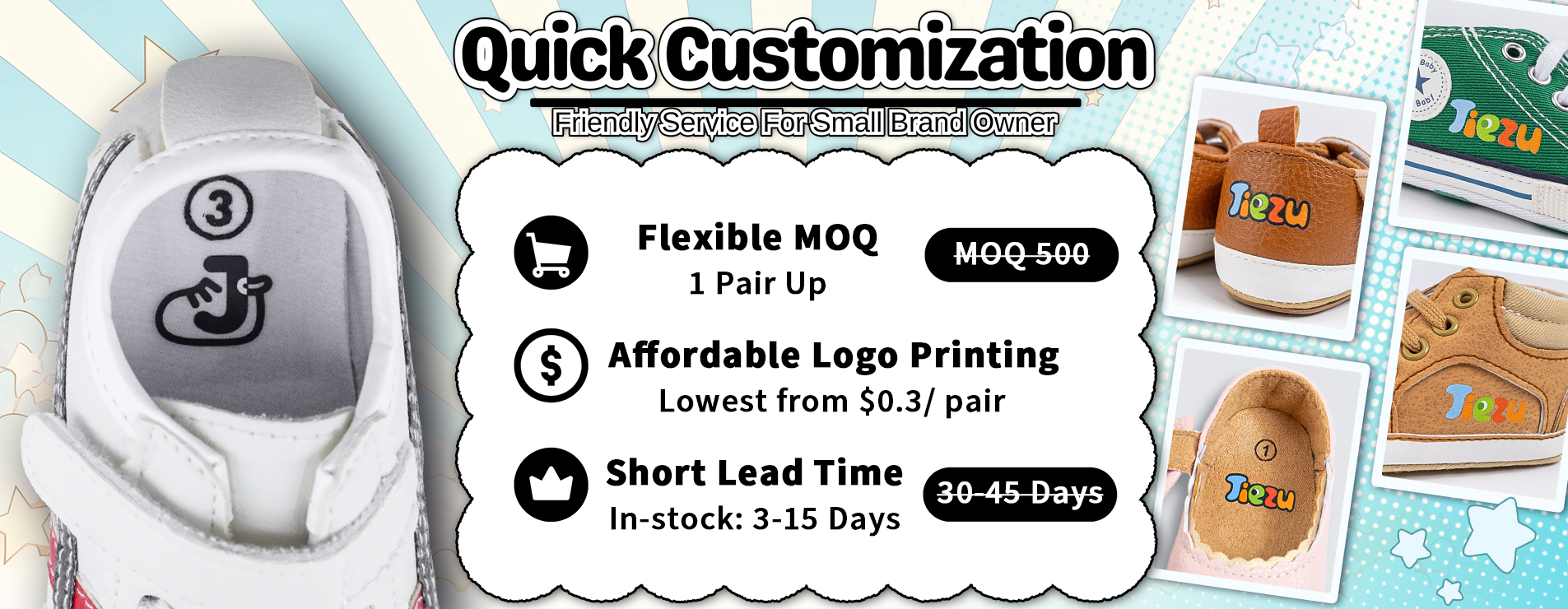
- Test with a Small Batch: Start with 500 pairs of a core style (like wholesale baby canvas sneakers) and add a simple logo or color accent. Track sales and feedback.
- Collect UGC: Launch a social media campaign asking parents to share their custom shoe photos. Repost the best ones to build community.
- Expand Gradually: Once you have traction, add new custom elements (like patterned insoles or embroidered details) and target new niches (e.g., “first birthday shoes” with a cake logo).
Light customization isn’t just a design choice—it’s a relationship-building tool. By turning baby shoes into personalized, shareable experiences, small brands can compete with giants and create a loyal customer base that lasts for years. Ready to start? Contact our team to explore custom options, MOQs, and pricing—your brand’s story starts with a single pair of shoes.